
More Than a Meal: A New Appreciation for Louisiana Agriculture
By: Anna Holmes
Before last Friday, I had never stepped foot on a farm.
Not a livestock farm. Not a cattle operation. Honestly, not even anything close to it.
As a communications intern from the heart of Baton Rouge, I’ve spent the past several months learning about agriculture from afar—writing about it, creating content and helping share the stories of Louisiana’s farmers and ranchers.
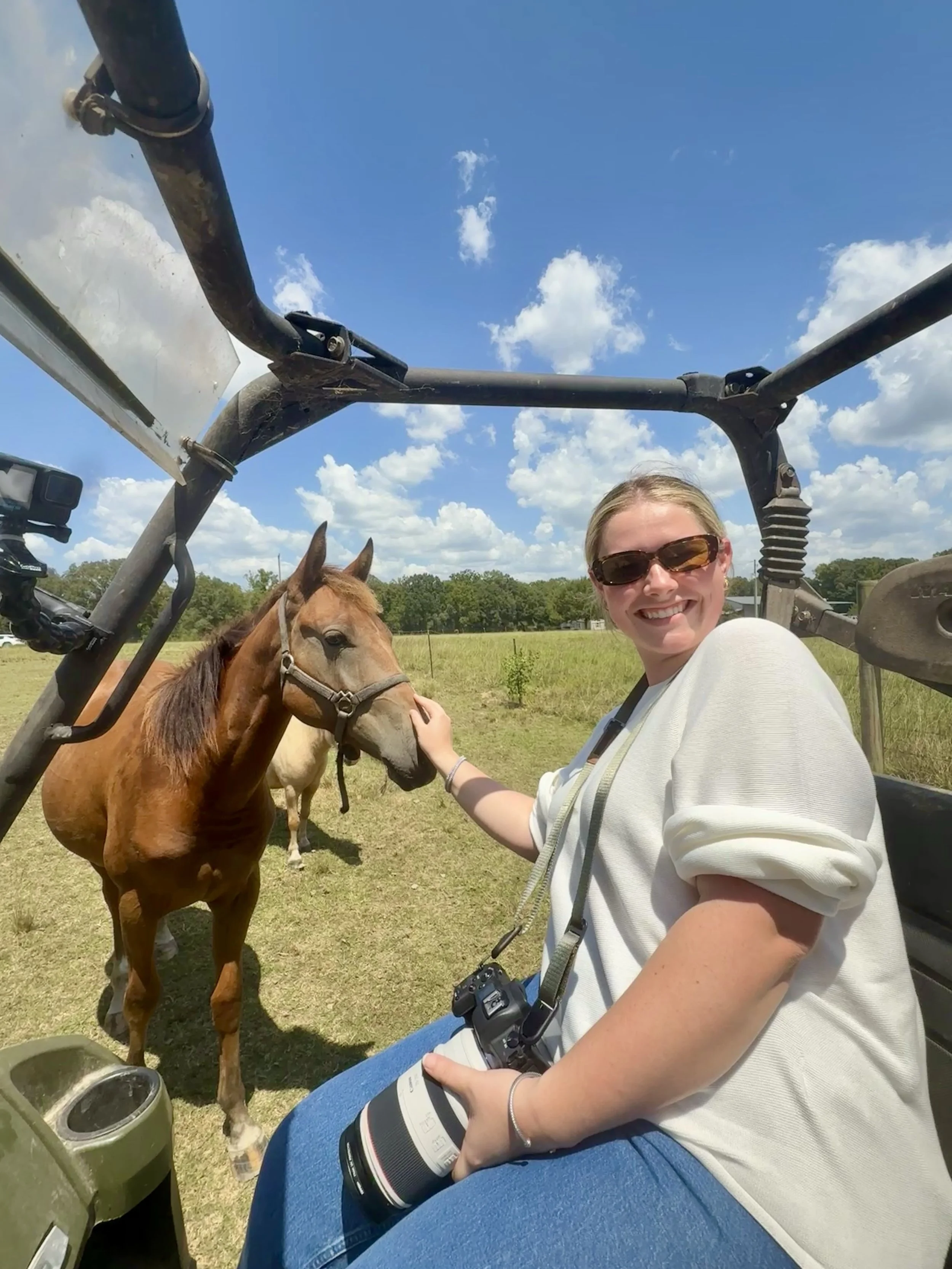
I didn’t grow up around farm life. In fact, when I started my internship, I knew very little about Louisiana agriculture. I had to learn the ins and outs of an industry I had never been around before—and I’m still learning.
So when I got the opportunity to step away from my desk and onto a working cattle operation, I couldn't wait to see what I would learn firsthand.
I tagged along with our TWILA team as we visited the home and livestock operation of Macy Rushing to film this edition of Feasting on Agriculture. I knew I was there to help tell Macy’s story; I just didn’t realize how much of it I would get to experience myself.
And I quickly learned there’s a lot more happening behind a pasture fence than meets the eye.
For many people, myself included, it's easy to see cattle grazing in a pasture and assume that's the extent of it. But spending time on a working livestock operation quickly changes that perspective.
There are fences to maintain, animals to monitor, feeding schedules to manage and countless decisions that have to be made to keep the operation running. Raising cattle requires time, patience and a level of responsibility that doesn't clock out, no matter the day—or how high the humidity and heat index climb.
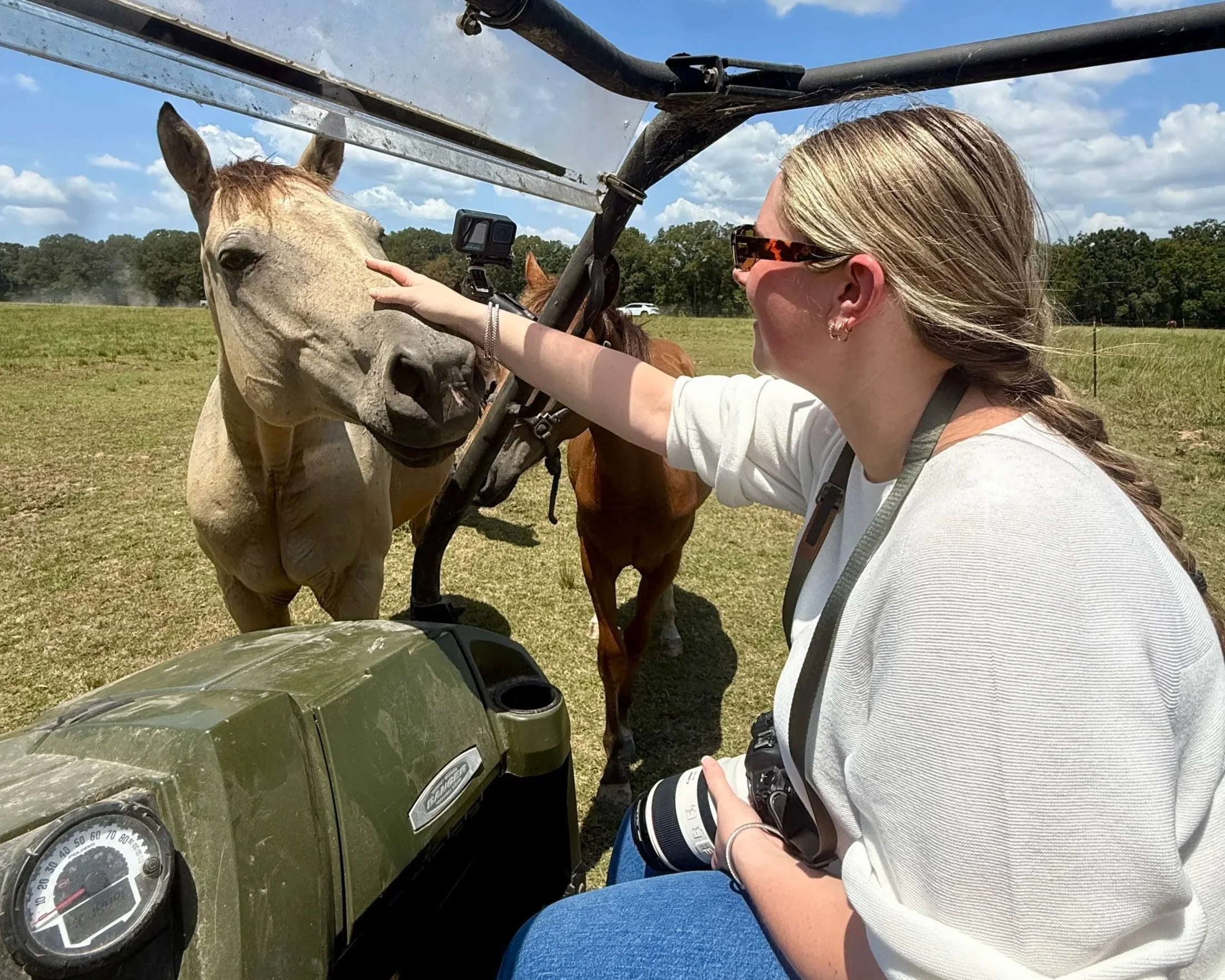
As someone experiencing it all for the first time, I found myself paying attention to things I probably would have overlooked before—the way the cattle were handled, the knowledge required to manage the herd and the amount of care and time that goes into raising healthy animals.
I gained a new respect for the way of life that countless Louisiana producers live each and every day.
But for Macy, that way of life isn’t just about raising cattle. It’s about raising a family, too.
Macy isn't just helping run a cattle operation with her husband. She's also a mom, and her children are growing up alongside the farm.
As we talked, she shared what it's like to balance the responsibilities of motherhood with the demands of running an agricultural operation—something I had never really considered before stepping onto the farm.
Her kids aren't simply watching their parents work. They're growing up around the animals, learning the responsibilities that come with farm life and becoming part of the operation themselves.
For me, that was one of the most eye-opening parts of the day. I came to the farm expecting to learn about cattle. I left realizing I had also gotten a glimpse into a way of life.
Of course, in true Louisiana fashion, you can't spend the day learning about Louisiana agriculture without eventually ending up in the kitchen and around the table together.
And in our case, that meant beef stew.
For this visit, Macy prepared a hearty beef stew using a recipe that had been passed down through her father-in-law. And somehow, that made the meal feel even more fitting.
One moment, you're standing in a pasture watching the animals that represent someone's livelihood. The next, you're gathered in the kitchen, talking, laughing and turning agricultural products into a meal everyone can enjoy.
It's a connection that can sometimes feel easy to overlook. But that's the beauty of agriculture—it doesn't stop at the farm.
It carries into family recipes, traditions and meals shared with the people we love.
As the stew simmered, it became clear that this wasn't just another recipe. It was a piece of family history, and a tradition worth keeping on the table.
It's easy to appreciate agriculture when you're sitting down to a warm meal. But seeing the work behind that meal firsthand? That's something different.
Because before that beef makes its way from the pasture to a pot of stew, there are farmers and ranchers spending long days caring for their animals and keeping their operations going.
That dedication may happen out of sight for many of us, but its impact reaches all of us. It keeps our tables full, our communities going and Louisiana moving forward.
I came to the farm expecting to learn about cattle. I left with a deeper appreciation for the people, families and hard work behind the food that makes its way to our tables.